
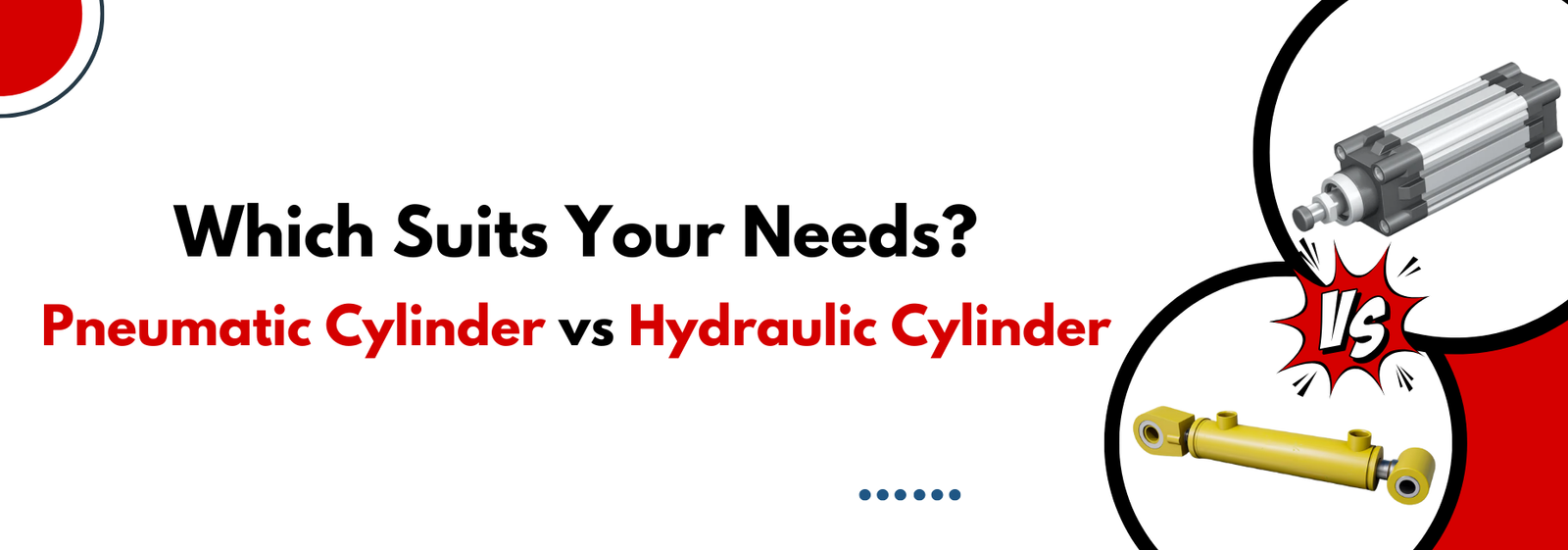
Have you seen a production line that can quickly pick items up and put them down with a steady rhythm and smooth motion? While many factories use systems that use either Pneumatic cylinders or Hydraulic cylinders, there are pros and cons that fit specific tasks. For Manufacturing Engineers, system integrators, and plant operations managers, this article outlines the main differences between the two. It should make for a simple and straightforward determination that should help you make straightforward and uncomplicated decisions that will have an immediate positive impact on your operations.

Quick Power Showdown: Force and Strength.
First, there is the more powerful option, hydraulic cylinders. They can lift massive machinery and devices, even over 50 tons. They are perfect for industries and shops where there is a lot of raw heavy lifting to be done.
Then there are pneumatic cylinders. They can lift lighter loads of a few tons, but their specialty is quick and efficient movement. Picture a machine that quickly sorts or assembles parts and can do so at a lightning pace. Now, you have an understanding of pneumatic cylinders.
Speed and response: Who Moves fastest?
Fastest response and speed? Pneumatics. In industries where there are high speed packaging lines and where every second counts, there is no other option.
In contrast, with more power and control comes a slower response. Hydraulics have a steady build-up of power and are a smooth motion throughout the cut or deformation of a material. It is controlled smooth motion for cuts and forming to give a perfect shot with no slop.
Cost and Maintenance: Budget-Friendly Reality Check
Pneumatics: quick to buy and easy to install, costing next to nothing to keep operational, and cheap to maintain.
Really, just as expensive, but going with hydraulics is able to withstand a more demanding work envelope saving significant money on replacements over the years.
Cleanliness and Safety: Shop Floor Essentials
Pneumatics are the gold star winners of the clean world. No messy splashing of oil, so food processing automation using pneumatics, and applications in clean rooms or other environments where contamination is not acceptable is becoming common.
Contrasting, Fully ruptured hydraulic systems are avoided in places that are designed to be messy, outdoors or where there is an explosion.
Space and Flexibility: Fitting Your Design
Pneumatics is able to achieve a slimmer design than hydraulics. This makes them easy to install and integrate. Hydraulics is bulkier with more space but more control is offered. Black box.
Energy and Efficiency: Powering Smarter Operations
Pneumatics inefficiently suck down your compressed air while costing you more on energy based on your compressor setup.
Hydraulics sip and save energy more wisely as their precise control over waste is much better in modern automation’s variable load situations.
Real World Picks: Match Your Application
Selecting between pneumatic and hydraulic cylinders is a straightforward answer in relation to your particular job. Here is how they compare in common situations.
- Heavy forging presses: Here, there is dominance from hydraulic cylinders as they provide the incredible force needed to perform the most challenging jobs in metalworking without breaking a sweat.
- Bottle filling lines: Here, there ignition of supreme operational speed and cleanliness is the domain of pneumatic cylinders as they operate and sustain a clean production line while rapidly completing tasks in the high volume range.
- Robotic arms: Here, there is versatility of pneumatics or hydraulics, but the hybrid of both triumphs, as pneumatic cylinders provide the rapid operational speed while hydraulics provide the power needed for large, heavy, vertical lifts and control the precise movements needed.
- Construction lifts: Here, hydraulic cylinders provide the unmatched operational versatility in the outdoor, rugged, and extreme weather conditions where high load and heavy weight is needed uncompromised reliability.
Deciding which cylinder to use is as follows:
If your project uses hydraulic systems that require an immense amount of force, then proceed with hydraulic systems. On the other hand, if you aren’t looking to use a lot of force over the speed of the system, then pneumatic is the way to go. Also, if you are dealing with a clean environment, then that’s another key reason to go with pneumatic systems, especially if you are dealing with a tight budget, as pneumatic systems are less expensive.
As mentioned above, the focus on speed and cleanliness should lean you towards a pneumatic system, while the need for sustained power over a longer period should adjust you to a hydraulic system. Collaborate with reliable Hydraulic Cylinder Manufacturers to achieve the ideal balance of power, precision, and reliability.