
Fluid power systems have come a long way from simple pump and cylinder setups. Plant managers and procurement heads today are working with equipment that runs cooler, lasts longer, and reports its own condition before a failure happens. This shift is changing how engineering teams plan maintenance budgets and select components for new machinery.
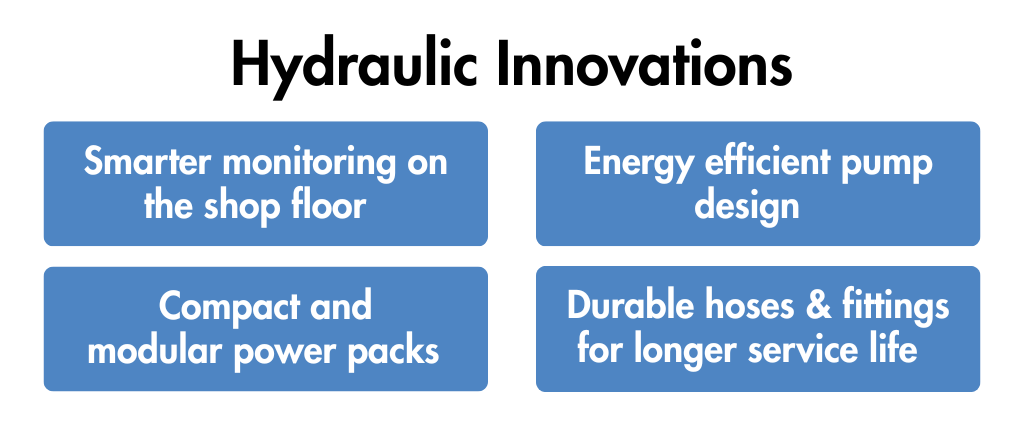
Smarter Monitoring on the Shop Floor
Sensors fitted to pumps, hoses, and cylinders now track pressure, temperature, and fluid condition in real time. Instead of waiting for a scheduled inspection, maintenance teams get an alert when a reading drifts outside the normal range. This shift toward condition-based monitoring reduces unplanned downtime and helps engineering teams plan repairs before a small issue turns into a costly breakdown. Procurement heads are also finding that equipment with built-in monitoring pays for itself through fewer emergency call-outs.
Energy Efficient Pump Design
Variable displacement pumps and load-sensing circuits are replacing older fixed displacement designs across many plants. These systems supply only the flow and pressure a task actually needs, rather than running at full output constantly. The result is lower electricity consumption and less heat generation, which in turn reduces strain on seals and fluid over the equipment’s working life. For plant managers tracking energy costs closely, this shift alone can justify upgrading older power packs.
Compact and Modular Power Packs
Machine builders are increasingly asking for power packs that fit into tighter spaces without sacrificing output. Modular designs allow individual components, such as pumps, valves, and reservoirs, to be swapped or upgraded without replacing the entire unit. This flexibility matters for plants running mixed machinery ages, where a standard footprint power pack can be adapted to different applications instead of custom-building a new one each time.
Durable Hoses and Fittings for Longer Service Life
Improved reinforcement layers and better fitting standards have extended the working life of hoses used in high-vibration and high-pressure environments. Fewer hose failures mean less fluid loss, less cleanup, and fewer safety incidents on the shop floor, which matters directly to procurement heads managing replacement part budgets across multiple sites.
Supporting These Advances with the Right Components
Keeping pace with these changes still comes down to sourcing components that are built to proper specifications. Teutonic Engineering, based in Coimbatore, supplies hydraulic pumps, power packs, cylinders, hoses, and accumulators suited to manufacturing, construction, and heavy machinery applications. Working with a supplier that understands both traditional and updated hydraulic components helps engineering teams select the right parts for current and future equipment needs.
conclusion
Fluid power systems are evolving steadily rather than overnight, and the plants that adapt early tend to see lower maintenance costs and fewer unexpected breakdowns. Staying informed about hydraulic innovations helps plant managers and procurement heads make better decisions when planning upgrades or sourcing components for new machinery.