
Have you ever entered your workshop and found oil collecting beneath one of your hydraulic cylinders? What may seem like a minor issue could translate into thousands of dollars lost due to repairs and downtime. This is where hydraulic glands come in. Hydraulic cylinders are your first defence against costly hydraulic oil leaks which are a nuisance to maintenance teams. For maintenance technicians and hydraulic cylinder repair specialists, knowing how to use hydraulic glands efficiently can greatly minimize costs for your operation.
Are you ready to learn how to prevent leaks before they happen? Let’s get into it.
What does a hydraulic gland do?
- The hydraulic gland functions as an exclusion barrier.
- The hydraulic gland attaches to the cylinder head, and as the piston rod enters and exits the cylinder, the hydraulic gland prevents the escape of high-pressure fluid.
- The gland contains a number of seals, wipers and rings designed to work in concert.
3 Sneaky Ways Leaks Happen (And How Glands Stop Them)
- Rod Seal Wear – The Silent Killer
- Piston rods as a result of daz and normal use may develop small scratches
- Gland seals that have been worn allow oil to bypass under pressure
- Gland Solution: seals in an arrangement that catches leaks that a single seal would allow to pass.
- Dirt Invasion – The Hidden Enemy
- Dust and grime are the enemies of wiper seals and the rod surface that is scored.
- Seal destruction a result of scratched rods from the outside.
- Gland Solution: two-part wiper systems that keep environmental seals from being contaminated.
- Pressure Spikes – The Sudden Attacker
- Rapidly changing loads can result in pressure spikes that cause weaker seals to fail.
- Gland Solution: Reinforced Design – can handle slippage.
Five Indicators That Your Hydraulic Gland Requires Immediate Attention
- Oil streaks on the rod (first indicator)
- Reduced speed of the cylinder (pressure loss)
- Spongy operation (internal bypass)
- Hot spots around the gland (friction buildup)
- Whistle sounds during extension/retraction
Modern vs. Old-Style Hydraulic Glands:
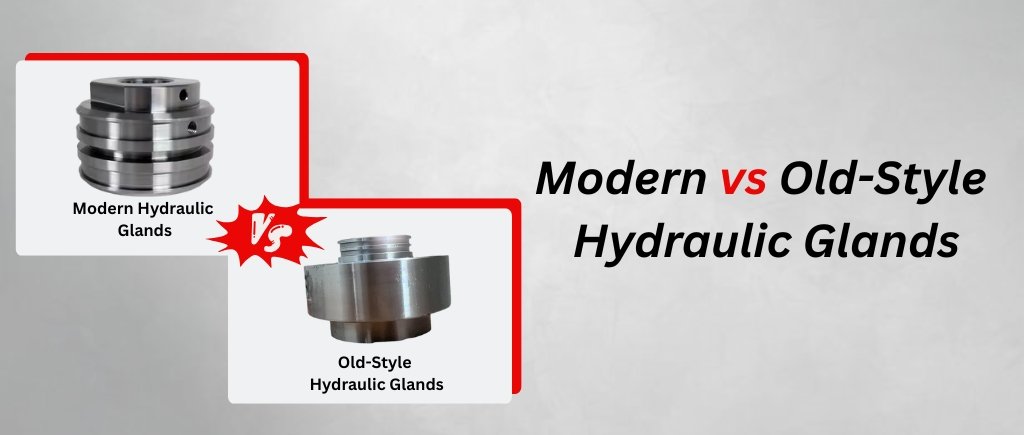
- Seal Life: Older glands last about six to twelve months before the seals fail. New ones last twenty-four months with no issues. That is double the uptime before needing to be replaced.
- Leak Prevention: Older glands with single seal designs let through oil. New glands have multi-layer seal systems to stop fluid loss.
- Dirt Resistance: Poor wiper protection old glands let grime damage the rods and seals. New glands with double wiper systems block contaminants to protect the rods.
- Pressure Rating: Old glands fail to meet today’s pressures maxing out at 250 bars. New glands are perfect for modern pressures at 400 or more bars.
- Repair Costs: Old glands fail need constant seal and rod repairs increasing total repair costs. New designs increase repair costs by 60%.
Checklist: Inspecting Glands
- Inspect clean rods
- Residue oil at gland contact
- Detect play / binding
- Tears in wiper seals
- Pressure test holds (no drift = gland good?)
When to Call in Pros
- Deep scoring of rods (machining is necessary)
- Cracked gland housings
- Multiple seal failures (indicates systemic problems)
- Exotic fluid applications
Ready to Seal Your Cylinders?
Hydraulic glands are more than just parts; they are your profit protectors. Stop chasing leaks and start preventing them.
Looking for high quality, lasting cylinders? Work with top Hydraulic Cylinder Manufacturers who understand gland performance.