
Choosing the correct hose for a hydraulic system is not something maintenance teams should rush through. Every hydraulic circuit has a maximum operating pressure, and the hose must be rated well above that figure, not just equal to it. Manufacturers list two numbers on a hose, the working pressure and the burst pressure. The working pressure is what the hose should handle continuously, while the burst pressure is the point of failure under a safety margin, usually four times the rated pressure. Maintenance engineers should always check the pump and system specification sheet before selecting a hose, rather than relying on the old hose size alone, since equipment upgrades often change pressure requirements over time. Recording the pressure rating on a tag near the hose helps the next technician avoid searching old files during a repair.
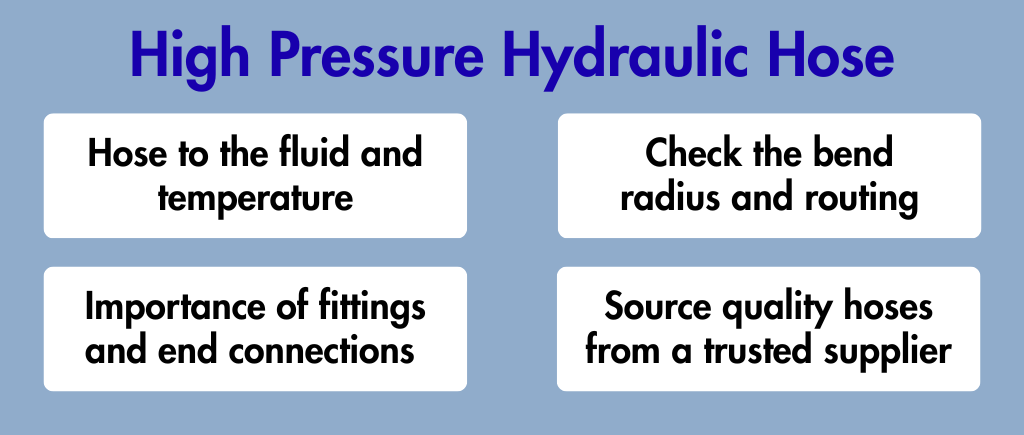
Hose to the Fluid and Temperature
Not every hose material works with every hydraulic fluid. Mineral oil, synthetic fluid, and water-glycol mixtures each react differently with the inner tube material of a hose. Using the wrong combination can cause the inner lining to swell, crack, or break down faster than expected. Temperature also plays a role, since hoses running near engines, presses, or furnaces face heat that standard hoses cannot tolerate for long. Checking the fluid compatibility chart and the ambient temperature range before purchase avoids early hose failure and repeated downtime.
Check the Bend Radius and Routing
A hose that is bent tighter than its rated minimum bend radius will wear out quickly, even if the pressure rating is correct. Kinks reduce the flow area and create stress points that eventually crack the reinforcement layers inside the hose. When routing a new hose, repair teams should leave enough slack for machine movement and avoid sharp turns near fittings. Using the correct hose length and proper clamps also reduces vibration damage, which is one of the most common causes of early hose failure in machines that run continuously.
Importance of Fittings and End Connections
A hose is only as strong as its end fittings. Mismatched thread types or worn crimped ends are a frequent source of leaks, even when the hose itself is in good condition. It helps to confirm the fitting standard used in the existing system, whether it is BSP, NPT, or metric, before placing an order. Reusing old fittings on a new hose assembly is not recommended, since the crimping and sealing surfaces wear down over repeated use and may not hold pressure reliably. A quick visual check for corrosion, thread damage, or an uneven crimp collar before installation can prevent a leak that shows up only after the machine is back in service.
Source Quality Hoses from a Trusted Supplier
Selecting the right hose is only half the job. Sourcing it from a supplier who understands industrial hydraulic applications makes a real difference in service life. Teutonic Engineering, based in Coimbatore, supplies hydraulic hose pipes built for high-pressure applications, along with matching adapters and couplings that ensure secure, leak-free connections. Working with an experienced supplier means maintenance teams get hoses that are sourced to meet proper quality standards, along with guidance on choosing the right size, fitting type, and pressure rating for the specific machine in question.
Getting hose selection right the first time saves plant supervisors from repeated breakdowns, unplanned downtime, and unnecessary safety risks on the shop floor. Checking pressure rating, fluid compatibility, bend radius, and fitting type before ordering makes the difference between a hose that lasts for years and one that fails within months. Working with a reliable supplier for a high Pressure hydraulic hose gives maintenance teams the confidence that every replacement will perform safely under real working conditions.