
Picture hydraulic cylinders lifting monumental loads with electric motors that possess precise lifting accuracy, as opposed to energy-reliant pumps that continuously run. Look no further than hydraulic electrification, which seamlessly integrates hydraulic power with electric smarts, revolutionising power systems across industries.
It is no surprise that hydraulic electrification is viewed as a revolution and the most viable option for the unending quest for 30-50% energy savings, zero emissions, and enhanced intelligent control. What is hydraulic electrification, and why is it the future?
What is Hydraulic Electrification?
Hydraulic electrification incorporates electric motors and smart controls to replace the traditional engine-driven or constant-speed hydraulic pumps while retaining the extraordinary force density of hydraulics.
Core Architecture Change:
- Earlier: A single, central, constant, and running pump that wastes energy on standby.
- Today:Decentralised, on-demand electric motors that control individual hydraulic functions.
- Outcome: Energy and work are utilised together.
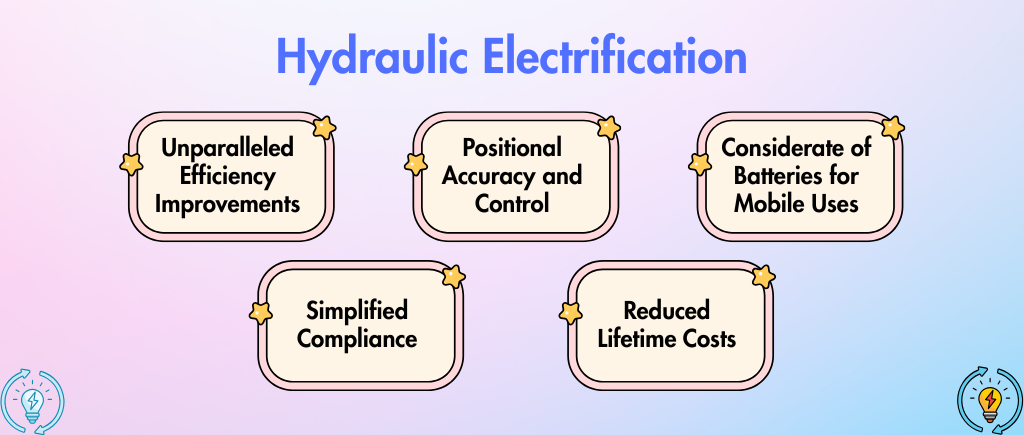
5 primary advantages fuelling the upward trend of hydraulic electrification:
- Unparalleled Efficiency Improvements
Hydraulic systems are reported to consume 25-50% less energy than traditional systems with constant motors, demonstrating peak efficiency.
- Positional Accuracy and Control
Robotics benefits most from VFD’s ability for smooth acceleration and deceleration of movements to the point of millimetre precision.
- Considerate of Batteries for Mobile Uses
Electrified hydraulics on off-highway vehicles (construction, agriculture, and mining) extend the battery runtime by:
- No idling losses during non-working cycles
- Energy recovery through regenerative braking
- Achieving the same work output with smaller battery packs
- Simplified Compliance with Emissions Regulations
Electrified hydraulics are ideal for meeting Tier 4 Final/Euro Stage V regulations with no machine redesigns, as they provide the necessary hydraulic power density while eliminating engine exhaust.
- Reduced Lifetime Costs
Total Cost Breakdown:
- Initial Outlay: 15-20% higher
- Energy Costs: 30-50% savings
- Maintenance Costs: 40% less (no engine servicing)
- Noise Abatement: Added workplace benefit
Real-World Cases of Leading Unchained
- Construction & Earthmoving:
- Electrified excavators with separate motorised boom/arm/bucket
- Case Study: JCB fully-electric 4220XE with 8 hours of fully autonomous hydraulic powering
- Industrial Manufacturing:
- Servo-Electric Pumps for Injection Moulding reduce cycle time and energy by 40%
- Metal Forming Presses: Controlled force (by the machine) delivered more & higher quality finished parts
- Material Handling:
- Automated Guided Vehicles (AGVs) with light and compact electro-hydraulic lifts
- Energy-capturing (regenerative braking) systems for the descent of warehouse cranes
- Agriculture:
- Battery-powered electric tractors with hydraulic implement integration
- Sprayers and harvesters with demand-based hydraulic circuits
Implementation Roadmap for Engineers
Phase 1: Assessment (1-2 months)
- Audit of current hydraulic loads by gravitational vs actual demand
- Identify & Map your energy waste (standby &over-pressurisation)
- Identify high-ROI retrofitting opportunities
Phase 2: Pilot Project (3-6 months)
Prioritise retrofitting (most-used) single-function cylinders to electric motor + VFD + hydraulic pump packages
Phase 3: Complete Electrification (12-24 months)
- Multifunction decentralised architecture for machines
- Predictive maintenance integrated (Factory IoT)
- Replicate successfully retrofitted Machines across the entire fleet
Essential Components of Required Technology
Essential Electro-Hydraulic Package for hostile environments:
- Brushless AC motors (IP67 rated)
- Tuning specific to hydraulics within variable frequency drives
- Preferred Axial Piston Hydraulic Load-Sensing Pumps
- Proportional Control Smart Valves
- Machine-Level Coordination via CAN Bus
The Challenges and Smart Solutions
- Concerns about Battery Life -decentralised motors resolve over 80% of idle loss
- Higher Initial Costs – energy savings yield 2-year payback
- Skills Gaps of Service Technicians – modular construction reduces the need for specialised training
- Durability in Harsh Environments – dust and water are managed by IP69K motors and sealed electronics
Your Competitive Advantage is here
With seamless integration of hydraulic force density and electric precision and sustainability, hydraulic- electric systems provide the optimum solution for manufacturers focused on net-zero sustainability and performance.
2026 Market Outlook: OEMs will embrace hybrid architecture electro-hydraulic components, forecasting a 35% increase in dominance across the sector.
Prepared to meet the efficiency requirements? Visit Hydraulic Cylinder Manufacturer to discuss electro-hydraulic smart manifolds for the next generation of hydraulic systems.