
The slow leak in your pump’s gland packing may be irritating, but the reality of the situation is that it is causing you to lose more than ₹50,000 yearly in lost fluids, lost energy, and emergency repair costs. In terms of industrial operators, gland leaks are the number one reason for pump downtime. Fortunately, it’s easier than it seems to learn how to prevent gland leakage in pumps.
Attention pump maintenance personnel, industrial operators, and repair technicians: these tried and tested recommendations and repairs will eliminate pump leaks by up to 90%, triple the life of packing, and ensure optimal performance of your pumps. Let’s stop the drip!
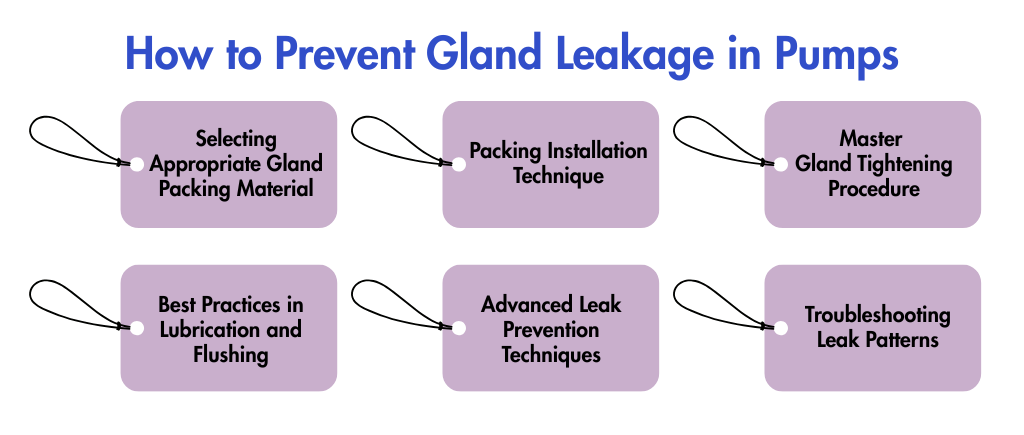
The Fundamentals of Pump Gland Leakage
The causes of gland leaks are:
- Worn packing
- Packing burns caused by over-tightening
- Fluid escape due to under-tightening
- Shaft misalignment
- Packing material contamination
- Packing material lubrication deficiency
- Selecting Appropriate Gland Packing Material
Using inappropriate gland packing material leads to premature pump failure:
- For general water pumps, use graphite/PTFE packing
- For chemical services, use Viton/FFKM elastomers
- For high-temperature steam use aramid fibre and graphite
- For abrasive slurries, use hardened packing grades
Selection Checklist:
- Use appropriate packing material based on the fluid that will be pumped
- Consider shaft speed (RPM rating)
- Packing Installation Technique
Most gland packing failures (90%) are the result of inadequate packing material installation. Use this 7-step method to ensure that the installation is done correctly.
- Shut down and lock out the pump power
- Completely remove old packing using a packing extractor
- ONLY clean the shaft and stuffing box using a Lint-free cloth
- Inspect the shaft for scoring. If the shaft has a score greater than 0.1mm, replace it with a new one
- Cut the packing rings at 45 degrees and stagger the joints
- Install and pack 4-5 rings; install the lantern ring in the centre if the pump is intended to flush
- For now, only FINGER TIGHTEN gland nuts.
Key Metrics:
- Box Depth = 1.25x width of packing
- Final gland clearance = 3-5mm
- Max packing rings = 4-5 (under stuff is better than overstuff)
- Master Gland Tightening Procedure
The Goldilocks Principle: Just right, not too loose, and not too tight.
Start-up Tightening Sequence:
- Day 1: Finger tight → run 30 min → tighten 1/8 turn
- Day 2: Tighten 1/16 turn → check drip rate (40-60 drops/min)
- Day 3: Final adjustment → mark nuts for future reference
- Weekly: 1/32 turn maximum adjustment
Over-Tight signs:
- Packing gets hot (>80°C)
- Increased power consumption
- Shaft sleeve scoring
- STOP immediately if detected
- Essential Daily/Weekly Maintenance Routine
5-Minute Daily Check (Prevents 80% of Problems):
- Visual leak inspection (drip rate, location)
- Gland follower temperature (cool to touch)
- Packing condition (glazing, extrusion)
- Shaft vibration/noise
- Lantern ring flush water flow (if equipped)
Weekly Deep Inspection:
- Measure gland clearance
- Check shaft end play (< 0.5mm acceptable)
- Verify flush water pressure (2-3 bar)
- Document drip rate trends
- Best Practices in Lubrication and Flushing
Packing Needs to “Breathe”:
- Clean Flush Water: 0.5-1 LPM continuous
- Seal Water Pressure: 2-3 bar above discharge pressure
- Lantern Ring Position: Centre of stuffing box
- Emergency Backup: Plant water system connection
Lubrication Types:
- Water flush (most common)
- API Plan 32 (clean pressurised fluid)
- Packing grease (intermittent service)
- Advanced Leak Prevention Techniques
Shaft Protection Solutions:
- Replace scored shafts (<0.1mm wear limit)
- Install shaft sleeves (₹8,000-15,000)
- Use hardened shaft coatings
- Shaft alignment must be less than [0.05 mm] to achieve alignment.
Packing Upgrade Options:
- Split packing (no pump teardown required)
- Low-friction PTFE/graphite blends
- Live-loading spring sets (maintains compression spring)
- Auto gland adjust
- Troubleshooting Leak Patterns
- 4 Corners Leak – Staggered packing rings
- Heavy Constant Drip – Gland is too loose
- Gland is Hot No Leak – Over-tightened (back off 1/4 turn)
- Leak When Running – Shaft misalignment
- Lantern Ring Leak – Flush water pressure too low
Quick Emergency Fix (24-hour solution):
- Evenly tighten 1/16 turn
- Check the flush water
- Make sure the shaft is not wobbling
- Check temp hourly
Preventative Maintenance Schedule
- Daily: Leak/tap, check (5 min)
- Weekly: Gland adjust, flush check (15 min)
- Monthly: Measure packing depth, check shaft (1 hr)
- 6 Months: Replace packing proactively (4 hrs)
- 12 Months: Full teardown + shaft/sleeve check (1 day)
Action for No Leak Emergencies
- Week 1: Pack materials + tools
- Week 2: Staff teaches correct installation
- Week 3: Every pump baseline (leak rates, hours)
Ongoing: Daily and weekly checklists
Leak-Free Guarantee: Facilities implementing this program average 18 months between repacks as opposed to an average of 6 months in most industries.
Are continuous pump leaks frustrating your business? The Hydraulic Power pack manufacturers who understand gland packing realities provide components that will last.