
Overview
The tiny cap on top of the reservoir is often overlooked. However, without this cap, maintenance teams and plant technicians may need to repair the reservoir unexpectedly, as a reservoir cap-less may let the reservoir get contaminated, become unbalanced, and may fail pumps prematurely. To prevent this service interruption, we must learn to understand the early signs of failure.
Component Matters More Than It Looks
This small piece does the work of two. It functions to filter the airflow and equalize pressure as oil is used up and more enters the system. When this piece of the system is worn out, both functions are lost and the hydraulic circuit will be subject to system failures as a result of contamination.
An optimal unit does the following:
- Purges air from the oil to avoid contamination
- Prevents vacuum lock in cylinder retraction
- Blocks moisture from entering the system and maintaining oil integrity
- Maintains uniform performance of the pump and valves
- Common Failure Signs
- Clogged Filter Element
Dust on the filter will cause resistance during pressure equalization. Reservoirs will struggle to equalize pressure, resulting in higher pressures and temperature spikes.
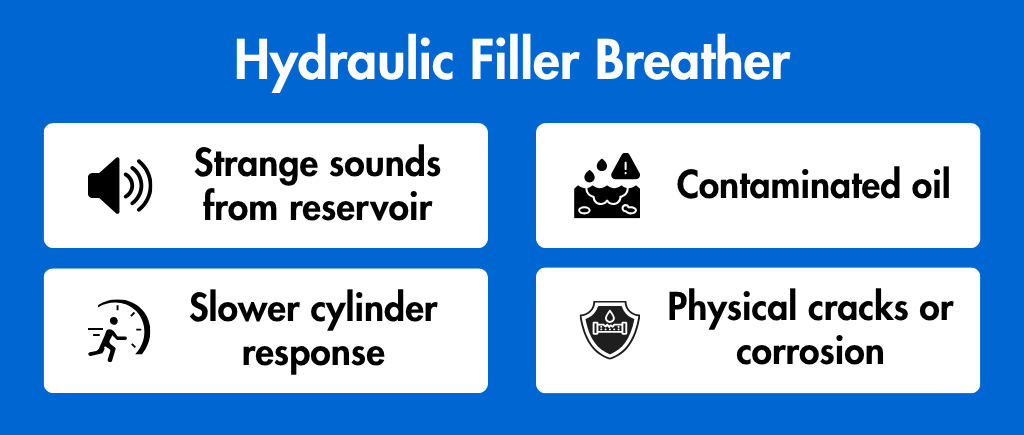
Strange Sounds From Reservoir
There will be a hiss or whistle if seals are damaged or the cap is missing and air is escaping the reservoir.
Contaminated Oil
Cloudy and milky oil is a solid indicator that fluids and particles are entering the system at an unfiltered breather.
Slower Cylinder Response
Cylinders that are slow to extend or retract may be caused by insufficient airflow at the reservoir.
Physical Cracks or Corrosion
Wear on the housing that includes rust or cracking means the component is no longer sealing.
Timely Replacement Matters
Failure to replace a component in a timely manner does not only mean that component will become inoperable, it also creates risk of failure for the entire hydraulic system. Failure to replace a component can mean that the entire system needs to be replaced due to wear and tear on pumps, valves, and seals caused by the introduction of contaminants into the system. In a system that operates 24 hours a day, breakdown repairs may cost more in the long run than replacing components in a timely manner based on a scheduled maintenance plan.
Best Practices for Maintenance Teams
- During every maintenance cycle inspect the filter element
- Replace the unit based on the manufacturer’s recommendation, not due to obvious failure
- Purchase replacement parts that meet the reservoir airflow and specification needs
- Purchase replacement parts that meet the reservoir airflow and specification needs, especially if the equipment is high frequency use
- Train technicians to identify the early indications of failure
Choosing the Right Replacement Component
Airflow capacity, filtration rating, and housing durability are not created equal. In high humidity or dusty environments, choosing a component that meets the needs of the system will provide higher durability and lower the amount of replacements needed overall.
Conclusion
Disregarding early indicators on hydraulic reservoir components creates more expensive problems in the future. Failing to address hydraulic filler breather system failures leads to diminished oil quality and compromises system reliability. Teutonic Engineering supplies hydraulic components that assist maintenance teams in shielding systems from damage and failures.