
Leak-Proof Performance
In high-pressure hydraulic systems, leak-proof performance is one of the most important signs of a healthy and reliable setup. It means the system can hold hydraulic fluid and maintain steady pressure even under tough working conditions like high temperatures, heavy vibrations, and constant mechanical stress.
A properly sealed hydraulic system makes sure that hydraulic energy is used efficiently for smooth and powerful operation. Achieving this is not just about tightening fittings or bolts, it depends on creating a strong and precise seal between metal surfaces at a microscopic level.
Problems Caused by Hydraulic Leakage
When a hydraulic system develops leaks, it can lead to several serious problems beyond just oil spills.
- Reduced System Efficiency:
Even a small hydraulic leak can lower system pressure. As a result, cylinders and actuators may respond slowly, while the pump is forced to work harder and consume more energy to maintain performance.
- Fluid Contamination:
Leaks not only allow oil to escape but also create an entry point for dust, moisture, and dirt. These contaminants can damage internal components by wearing down the surfaces of costly hydraulic cylinders and other parts.
- Safety and Environmental Risks:
Hydraulic oil leaks can make work areas slippery and dangerous for employees. Since hydraulic fluids are also flammable, leaks may increase fire hazards and lead to environmental concerns or costly penalties.
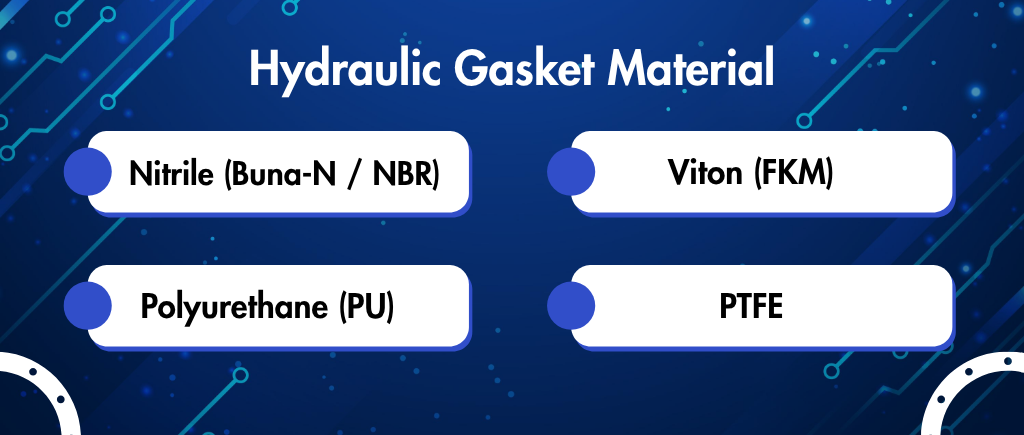
Best Hydraulic Gasket Materials Used in High-Precision Engineering
Choosing the right gasket material is important for maintaining pressure, preventing leaks, and improving the lifespan of hydraulic systems. Different materials are designed to handle different temperatures, pressures, and working conditions. Here are some of the most commonly used hydraulic gasket materials in high-precision engineering applications.
- Nitrile (Buna-N / NBR) – A Reliable Everyday Option
Nitrile is one of the most popular gasket materials used in hydraulic systems because of its strong resistance to petroleum oils, fuels, and standard hydraulic fluids. It is widely preferred in industrial applications due to its balance of performance and affordability.
Best suited for: Standard industrial hydraulic systems operating between -40°C and +120°C.
Advantages:
- Good flexibility and sealing performance
- Excellent resistance to oil-based fluids
- Affordable and widely available
Limitations:
- Not suitable for very high temperatures
- Performs poorly with synthetic brake fluids
- Viton (FKM / Fluorocarbon) – Designed for High Temperatures
Viton is commonly used in demanding hydraulic environments where heat and chemical exposure are major concerns. It can maintain its sealing performance even under extreme temperatures and harsh operating conditions.
Best suited for: Aerospace systems, heavy industrial machinery, and high-temperature hydraulic applications.
Advantages:
- Can handle temperatures up to 200°C
- Strong resistance to chemicals, oils, and acids
- Long-lasting performance in harsh environments
Limitations:
- More expensive compared to standard gasket materials like Nitrile
- Polyurethane (PU) – Built for Heavy-Duty Applications
Polyurethane is known for its exceptional toughness and mechanical strength. It performs extremely well in high-pressure systems and environments were seals experience heavy wear and abrasion.
Best suited for: High-pressure hydraulic systems, earth-moving machinery, and industrial presses.
Advantages:
- Excellent resistance to wear and tearing
- Handles high pressure effectively
- Ideal for demanding industrial operations
Limitations:
- Not recommended for systems exposed to steam or high-water content
- PTFE– Ideal for Low-Friction Performance
PTFE is different from rubber-based gasket materials because it is a high-performance plastic. It offers outstanding chemical resistance and extremely low friction, making it suitable for specialized hydraulic systems.
Best suited for: High-speed cylinders and systems using synthetic or non-standard hydraulic fluids.
Advantages:
- Works well in highly chemical environments
- Very low friction for smooth operation
Limitations:
- Does not regain its original shape after compression
- Often requires an additional support or energizer ring for effective sealing
Maintaining leak-proof performance is essential for improving the efficiency, safety, and lifespan of any hydraulic system. From handling pressure and temperature to resisting wear and chemical exposure, every hydraulic application requires the right sealing solution. Choosing the correct hydraulic gasket material not only helps prevent leakage and contamination but also ensures reliable long-term performance in demanding industrial environments.