
Modern aviation is a remarkable example of advanced engineering and innovation. Aircraft engines are carefully designed to generate the powerful thrust needed to move an aircraft through the air at extremely high speeds, while the wings are engineered to create the lift required for stable flight. However, one of the most important achievements in aviation is the development of reliable aircraft control systems that allow pilots to maintain complete command of the aircraft during every stage of flight while ensuring maximum aircraft safety.
When flying thousands of feet above the ground, pilots must be able to make precise adjustments to the aircraft’s direction, altitude, and airspeed. Managing these movements is not simple, especially because strong airflow and high-speed conditions make aircraft control more challenging. To maintain aircraft safety, these control systems are designed to be highly responsive, powerful, and fail-safe. In addition, multiple layers of redundancy are included so that backup mechanisms can continue functioning even if one component experiences a failure.
In aviation, aircraft safety is never dependent on a single component alone. Every control mechanism, hydraulic system, sensor, and flight component works together to ensure reliable performance, stable aircraft control, and passenger protection. Even the most advanced and powerful aircraft engine becomes ineffective without proper aircraft control systems. This is why modern aircraft are designed with aircraft safety as the foundation of every engineering decision.
The Crucial Role of Hydraulic Systems in Aircraft Safety
Hydraulic systems play an important role in modern aircraft control and aircraft safety. Whenever a pilot operates the yoke or side stick, hydraulic systems help move critical flight control surfaces such as the rudder, elevators, flaps, and ailerons. These movements are essential for maintaining stability, controlling direction, and ensuring safe aircraft operation during flight. This is one of the main reasons hydraulic technologiescontinue to remain a key part of modern aviation systems.
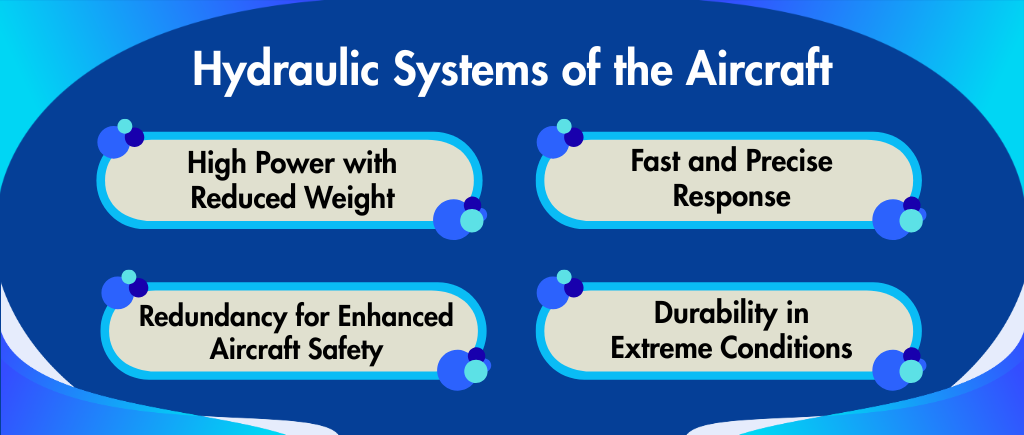
High Power with Reduced Weight
One of the biggest advantages of hydraulic systems in aviation is their excellent power-to-weight ratio. Aircraft require systems that are both lightweight and powerful to improve efficiency and performance. Hydraulic systems can generate strong force while adding less weight compared to many mechanical or electrically driven alternatives. This allows aircraft to operate complex flight control surfaces and landing gear systems more efficiently without compromising aircraft safety.
Fast and Precise Response
Aircraft safety often depends on quick and accurate control during flight. Hydraulic systems are capable of providing immediate response when pilots make adjustments to direction, altitude, or speed. These real-time movements help stabilize the aircraft during turbulence, take off, landing, and emergency situations. Their ability to react instantly makes hydraulic systems a reliable part of aircraft control technology.
Redundancy for Enhanced Aircraft Safety
Modern aircraft are designed with multiple backup systems to improve safety and reliability. Instead of depending on a single hydraulic circuit, most commercial and military aircraft use two or even three independent hydraulic systems. If one system experiences a failure, the remaining systems continue functioning normally. This redundancy ensures that pilots can still maintain aircraft control, steering, and braking functions even during critical situations, greatly improving overall aircraft safety.
Durability in Extreme Conditions
Aircraft hydraulic systems are built to perform under extremely demanding environments. Aviation components regularly experience freezing temperatures at high altitudes, intense pressure changes, and extreme heat during landing operations. Despite these harsh conditions, hydraulic systems must continue operating reliably to control landing gear deployment, braking systems, and flight surfaces.
Engineering in the aerospace industry demands exceptional precision because even the smallest error can affect performance and safety. Every movement within an aircraft is carefully designed and controlled through advanced engineering systems. From deploying landing gear in freezing high-altitude conditions to handling turbulence during flight, the hydraulic systems of the aircraft play a vital role in maintaining smooth and reliable control of force and motion.
Modern aerospace systems are designed to be lightweight, compact, and highly powerful while also including multiple layers of redundancy for added safety. These features help ensure that aircraft systems continue operating effectively even under challenging conditions. The same engineering principles are also applied in industrial and land-based applications where systems must deliver both precision and long-term durability. Just as hydraulic technology supports safe and efficient aircraft operations, reliable hydraulic systems continue to drive performance and operational success across many industries